.png)
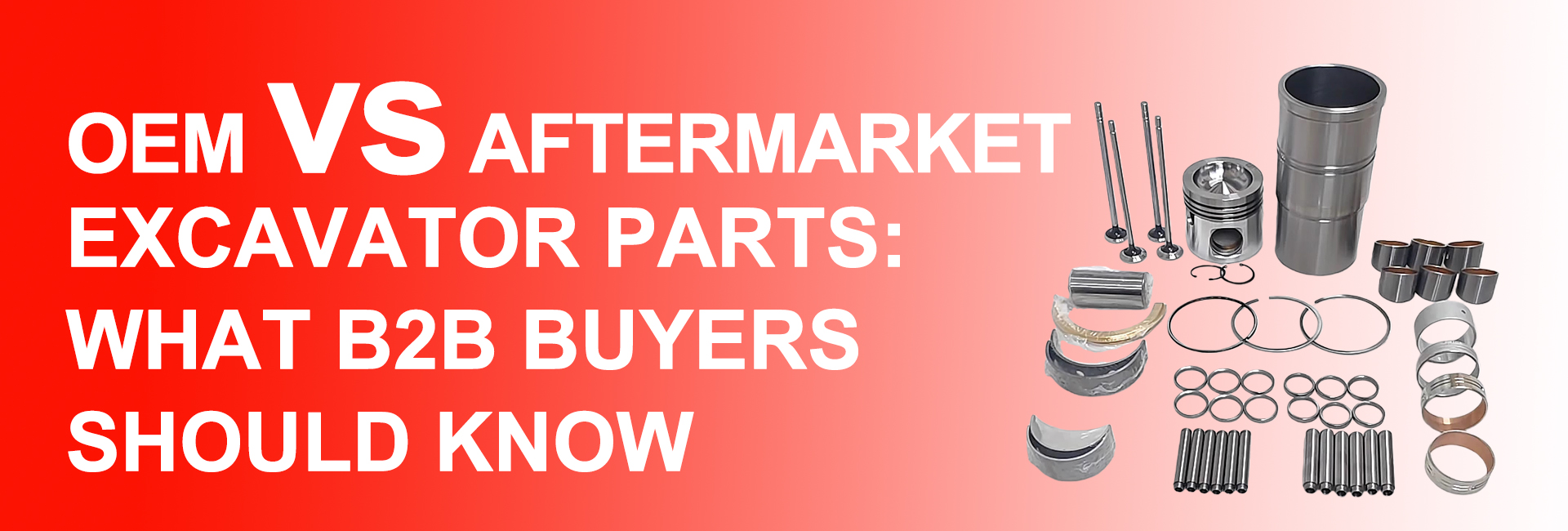
When it comes to excavator maintenance and repair, the question of whether to use OEM (Original Equipment Manufacturer) or aftermarket parts is crucial—especially for B2B buyers such as importers, distributors, and wholesalers. This decision can have long-term implications for your business: affecting your equipment uptime, your operating costs, and your company’s reputation with end users. With increasing pressure to balance cost savings and performance, B2B buyers must understand the true differences between OEM and aftermarket excavator parts, the risks and opportunities of each, and how to choose the best fit for their supply chain and client needs.
As the global construction industry grows, the excavator parts market has become more competitive, sophisticated, and international. There are thousands of suppliers and brands to choose from, and information can be overwhelming. OEM parts are often regarded as the gold standard, promising precision fit and factory-tested quality, but at a premium price. Aftermarket parts, on the other hand, come in a vast range—from low-cost generic options to high-end alternatives that can sometimes outperform OEM. For B2B buyers, making the right decision is about much more than price—it’s about balancing risk, quality, availability, long-term machine health, and the credibility you build with your customers.
This article gives B2B buyers a comprehensive, practical, and up-to-date guide to OEM vs aftermarket excavator parts, including what defines each, how they are produced and supplied, what to expect in terms of quality, warranty, and logistics, as well as key selection criteria, common pitfalls, and best practices. Real industry examples and actionable advice are provided to empower you to make smart decisions and build a reliable, future-proof parts procurement strategy.
What Are OEM and Aftermarket Excavator Parts?
OEM (Original Equipment Manufacturer) parts are components made by the company that originally designed and produced the excavator—or by a licensed, designated partner working to the same exact specifications. When you buy OEM, you’re getting parts that are identical to those supplied with new machines: same materials, same tolerances, and same quality control standards. OEM parts are generally branded with the equipment manufacturer’s logo and come with full factory warranty.
Aftermarket parts, by contrast, are produced by third-party manufacturers not directly affiliated with the original equipment brand. Aftermarket suppliers may reverse-engineer OEM parts, use improved materials, or even introduce design tweaks. This sector includes both reputable brands that invest in R&D and quality control, as well as generic suppliers focused on low-cost mass production. As a result, the aftermarket market is incredibly diverse: it offers options for almost every budget and need, but also brings variation in quality, reliability, and support.
Selection Criteria: Key Factors for B2B Buyers
1. Quality, Compatibility, and Performance
OEM Parts:
Manufactured according to strict specifications and subject to rigorous quality control, OEM parts offer guaranteed compatibility with your equipment.
Fit, finish, and performance are reliable, ensuring machines work as designed.
For critical or high-stress components (such as engine internals, hydraulics, and electronics), OEM parts are often considered the safest choice.
OEMs usually offer technical documentation, installation support, and extended warranties.
Aftermarket Parts:
Quality varies widely. Top-tier aftermarket manufacturers use high-grade materials, modern manufacturing techniques, and conduct extensive testing. Their parts can match—or sometimes even exceed—OEM quality.
Lower-end or generic aftermarket parts may use cheaper materials, looser tolerances, and limited quality control, making them more prone to premature wear, poor fit, or failures.
Compatibility must be verified by part number and specifications. Some high-end aftermarket brands even offer performance enhancements or improved durability.
Not all aftermarket suppliers provide full documentation, so technical expertise on your team is helpful.
B2B Takeaway: Always request technical data, product samples, or certifications for aftermarket parts. Don’t assume all “aftermarket” is the same—vet brands carefully, and use only trusted suppliers for critical applications.
2. Price, Availability, and Total Cost
OEM Parts:
Prices are typically higher due to branding, supply chain overhead, and factory warranty.
Limited to official dealer networks—often slower to procure, especially for older or less-common excavator models.
Bulk discounts are less common; global logistics and customs may add time and cost.
Aftermarket Parts:
Offers a wide price spectrum—from cost-effective replacements to premium performance parts.
Many aftermarket suppliers hold large inventories and offer rapid delivery, especially for common wear parts and consumables.
Localized aftermarket distributors often provide better flexibility for urgent or bulk orders.
Some high-quality aftermarket brands cost nearly as much as OEM, but with faster lead times and improved supply chain agility.
B2B Takeaway: While cost savings can be significant, always factor in potential risks—such as part failure, increased maintenance, or client complaints—when opting for lower-cost aftermarket parts. For large, multi-machine fleets, balancing cost and supply speed can unlock significant operational advantages.
3. Warranty, Support, and Brand Reputation
OEM Parts:
Backed by the equipment manufacturer’s warranty and support network.
Warranty claims are usually straightforward, with clear procedures and technical backing.
OEM brands tend to have strong reputations, which can enhance your credibility with end customers.
Aftermarket Parts:
Warranty policies vary by supplier. Leading aftermarket brands often provide warranties that rival OEM coverage, but others may offer minimal support.
Some suppliers provide technical documentation, while others rely on resellers for after-sales service.
In emerging markets, strong aftermarket brands can actually have superior local support and better communication than overseas OEMs.
B2B Takeaway: For long-term projects or clients who expect comprehensive service, supplier support and warranty transparency are critical—choose partners with proven after-sales systems and a reputation for honoring claims.
4. Innovation, Product Range, and Customization
OEM Parts:
Focus on standardization and reliability, with limited room for customization or upgrades.
Product updates typically lag behind market demand, as OEMs prioritize fleet-wide consistency.
Aftermarket Parts:
Some aftermarket manufacturers invest heavily in innovation, offering parts with improved materials, new coatings, or design tweaks that address common OEM weaknesses.
Wider product range, including parts for discontinued machines, custom applications, or market-specific needs.
Faster response to new trends, environmental regulations, and evolving customer feedback.
B2B Takeaway: If you serve specialized industries or older machine populations, aftermarket partners may offer better flexibility and market responsiveness.
Industry Case: A Real-World B2B Comparison
A leading excavator parts distributor in Southeast Asia faced an urgent challenge: one of their fleet clients required hydraulic pumps for a number of Komatsu excavators that were over ten years old. The local Komatsu dealership quoted high prices and could only supply limited stock, with an estimated delivery time of six weeks.
Faced with potential project delays and increased costs, the distributor turned to a respected aftermarket supplier specializing in Japanese excavator components. The supplier provided comprehensive technical documentation, samples for quality testing, and offered a competitive price that was 30% less than OEM.
The parts were delivered in under two weeks. After extensive testing and field deployment, the pumps performed reliably for over 18 months—even under heavy-duty conditions. The fleet operator noted no significant difference in performance or lifespan between the OEM and aftermarket pumps. As a result, the distributor not only saved costs and avoided downtime, but also gained a reputation for rapid, flexible problem-solving—leading to increased repeat business and referrals in the region.
Lessons Learned:
Partnering with quality aftermarket suppliers can bridge gaps in OEM supply, reduce lead times, and protect project schedules.
Rigorous quality checks, pilot installations, and clear communication with both supplier and end client are essential.
A data-driven approach—tracking part performance and customer satisfaction—can help optimize procurement strategy over time.
Practical Tips: How to Make the Right Choice
1. Always Use the Correct Part Number
Whether you choose OEM or aftermarket, never rely solely on product descriptions or images. Always use the exact part number and machine model to ensure compatibility and fit.
2. Ask for Samples or Third-Party Test Reports
Especially for aftermarket parts, request samples for hands-on inspection or review any available third-party test results. Quality aftermarket brands often provide certificates or detailed technical data.
3. Compare Warranty Terms Upfront
Don’t assume all parts have similar warranty coverage. Review supplier terms in detail—length of warranty, claim process, and what is (or isn’t) covered.
4. Assess Supplier Reputation
Check for client testimonials, case studies, industry certifications, and service networks. For larger orders, consider a site visit or virtual factory tour.
5. Don’t Sacrifice Value for Price Alone
While aftermarket parts often deliver strong value, be wary of “too good to be true” pricing. Consider the total cost of ownership—including potential downtime, maintenance, and client reputation impact.
6. Start with a Trial Order
For new suppliers or brands, begin with a small order for non-critical parts. Track performance and gather feedback before scaling up.
7. Maintain Open Communication
Good suppliers act as partners, not just vendors. Discuss your unique requirements—urgent delivery, technical support, special packaging, etc.—and ensure both sides understand expectations.
8. Document and Optimize
Keep records of part performance, failure rates, and client feedback. Use this data to adjust your procurement strategy and supplier roster over time.
Conclusion: Making Informed B2B Decisions in 2025 and Beyond
There is no one-size-fits-all answer to the OEM vs aftermarket excavator parts debate. Both have their strengths and weaknesses, and the “right” choice often depends on your business model, client requirements, equipment fleet, and growth strategy. OEM parts provide peace of mind and brand assurance—often essential for new or high-value machines. High-quality aftermarket parts, meanwhile, offer significant opportunities for cost savings, supply chain flexibility, and even technical upgrades.
For B2B buyers, the best results come from building a trusted network of both OEM and reputable aftermarket suppliers. By staying informed, prioritizing quality, and being proactive with supplier evaluation, you can maximize machine uptime, control costs, and strengthen your business’s reputation in a competitive global market.
Looking forward, the excavator parts industry will only grow more sophisticated and customer-focused. Companies who master smart sourcing and supplier partnerships will lead the way—delivering value, reliability, and peace of mind to every end user.