.png)
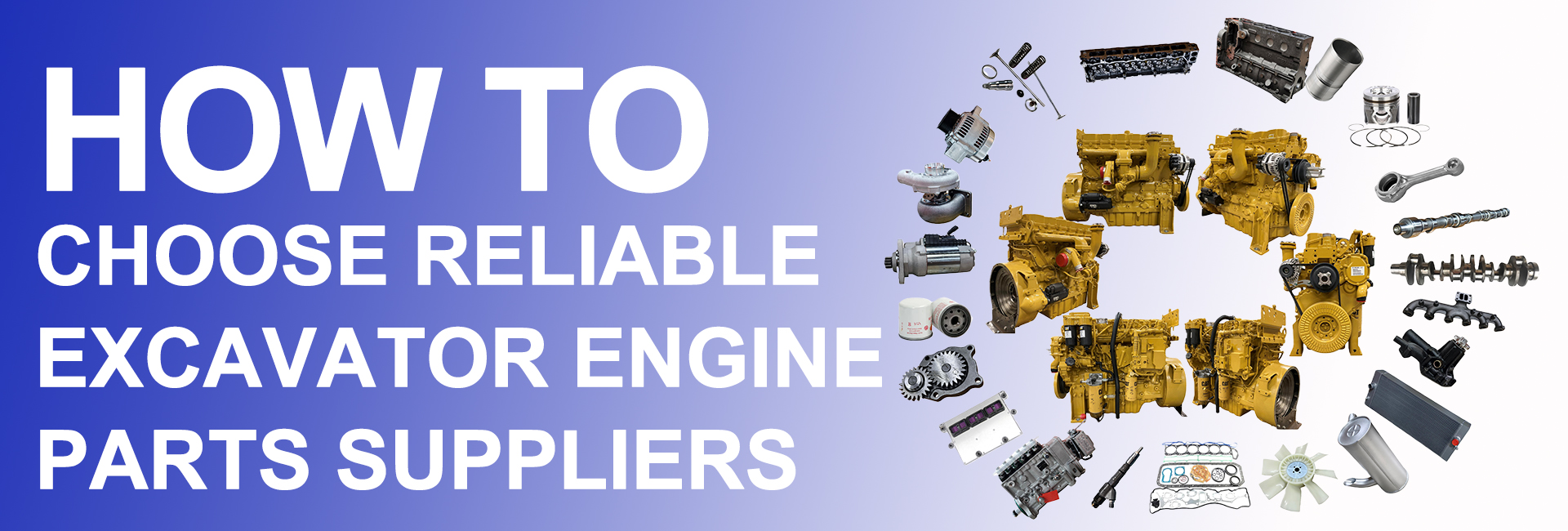
Selecting a supplier is not just about comparing prices; it is a strategic decision that impacts the lifespan of your parts and machines, your construction efficiency, and operational safety. For B2B clients such as importers, distributors, and wholesalers, a professional selection process can help you build a strong, reliable supply chain. Here’s a proven “Three-Step” strategy for making the best supplier choice.
1. Step 1: Clarify Your Own Needs (Internal Review)
Before approaching suppliers, clearly define your internal requirements. This will help you quickly filter out unsuitable candidates.
1. Precise Parts Information
Product Name & Part Number: Instead of just product names, always provide the original part number when contacting suppliers.
Brand & Model: Clearly state which brand and specific excavator model the parts will be used for (e.g., Caterpillar E320D, Komatsu PC200-8, Hitachi EX200).
Engine Model: For engine components, always specify the exact engine model (e.g., CAT C4.4, Komatsu 6D102). This is the most accurate way to ensure compatibility.
2. Nature of Demand
Urgency: Is the part for routine maintenance (like filters and bushings), or for urgent repairs (like crankshafts or high-pressure fuel pipes)?
Quality Requirements & Budget: Do you require premium reliability with original parts (which may be expensive and often out of stock)? Do you need stable-quality, slightly higher-priced OEM parts? Or is your focus on cost-effective aftermarket parts with reliable supply?
2. Step 2: Assess Supplier “Hard Power” and “Soft Power”
Once your needs are clear, evaluate potential suppliers across several core criteria:
1. Product Quality & Technical Expertise
Original Quality Assurance: Reliable suppliers clearly indicate whether parts are original. For example, you may see listings like “Isuzu genuine parts covering all models,” which demonstrates credibility.
Wide Compatibility: Top suppliers offer parts for multiple leading brands (e.g., Caterpillar, Komatsu, Hitachi, Kobelco, Kato, Sumitomo, Hyundai, Volvo, SANY, XCMG), indicating deep market understanding.
Materials & Workmanship Reputation: Focus on user feedback about product details. Comments like “6D105 bushings fit perfectly with no grinding needed” show high manufacturing precision. For oil pipes, liners, and similar items, top materials mean reduced wear and longer service life.
2. Professional Service & Reliability
Expert Consultation & Matching: A good supplier provides expert advice to ensure correct product selection, avoiding costly mistakes.
Logistics & Warehousing:
Shipping Speed: For urgent repairs, speed is vital. Feedback like “shipping the next day” signals a responsive supplier.
Protective Packaging: Industrial parts need solid packaging for safe delivery.
Stock Availability: Ask if the supplier maintains large inventory, which directly impacts their ability to meet urgent needs.
3. Brand Reputation & User Feedback
Case Studies & Experience: If possible, check the supplier’s industry track record and cooperation history.
Brand Recognition: Suppliers who work with well-known engine brands (e.g., Caterpillar, Cummins, Volvo, Weichai, Yuchai) are often more trustworthy.
Real User Reviews: Rely on actual user experiences. Concrete, positive feedback like “the generator starts more smoothly, runs quieter than before” adds real value.
Step 3: Make the Decision & Build Long-Term Cooperation
1. Compare
Create a simple comparison table to rate each candidate supplier on price, quality, logistics, service, and reputation. This helps you make a well-balanced decision.
2. Start with a Trial Order
For new suppliers, place a small or non-core parts order to verify their product quality, service, and delivery speed.
3. Establish Long-Term Partnership
Once you identify a reliable supplier, consider building a long-term relationship. Loyal customers typically enjoy better prices, priority support, and faster logistics.
Summary: The Ideal Excavator Engine Parts Supplier
An ideal supplier should have:
A full range of aftermarket, OEM, and original parts with strict quality standards and complete model coverage.
Professional product selection guidance, fast shipping, and reliable packaging.
A strong industry reputation with ample positive user feedback.
Final Tip: When browsing search results, pay special attention to suppliers or brands with specific, positive user testimonials. Real case studies are often the best starting point for finding a truly reliable partner.