.png)

The new ISHIWA EFC Actuator range from SCOTE Machinery is designed for QSK19, QSK23, QSK45 and QSK60 engine applications, offering stable fuel control, fast response and a practical aftermarket solution for global parts distributors.
SCOTE Machinery Newsroom | Product & Industry Report
In the heavy equipment business, some of the most important components are not the largest or most expensive ones. A diesel engine may have a massive block, heavy crankshaft and complex fuel system, but a relatively small electrical component can still have a major influence on how smoothly that engine runs. The EFC Actuator (Electronic Fuel Control Actuator) is one such component.
For repair workshops, fleet operators and construction machinery parts distributors, problems involving fuel control can be frustrating. An engine may have unstable speed, poor response or difficulty maintaining the required operating condition. Mechanics may inspect the fuel system, electrical connections and control components before finding the source of the problem. This is one reason demand for reliable fuel control components continues to grow in the global aftermarket.

Responding to this demand, ISHIWA Electrical Parts, a new construction machinery electrical parts brand developed by SCOTE Machinery, has introduced a new range of EFC Actuators for heavy-duty diesel engine applications. The first range includes applications for QSK19, QSK23, QSK45 and QSK60 engine platforms, giving international importers, distributors, wholesalers and repair businesses another aftermarket option when sourcing electronic fuel control parts.
But what exactly does an EFC Actuator do, and what should a buyer check before ordering one?
What Is an EFC Actuator?
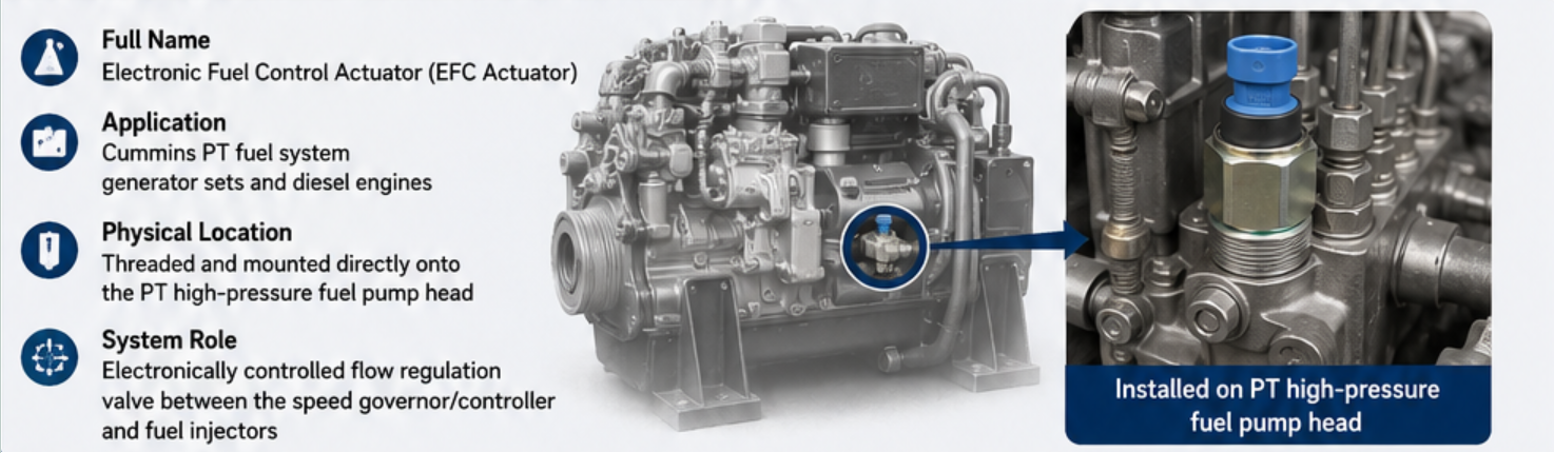
An EFC Actuator, short for Electronic Fuel Control Actuator, is an electrically controlled component used to help regulate fuel delivery according to the operating needs of a diesel engine. It may also be searched for in the aftermarket as an Electronic Fuel Pump Actuator, fuel control actuator or electronic governor actuator, depending on the engine system and local market terminology. Its basic purpose is easy to understand.
A heavy-duty diesel engine does not need exactly the same amount of fuel at all times. Fuel demand changes when the engine starts, idles, accelerates or works under a heavy load. The fuel control system must therefore respond quickly and accurately to changing operating conditions.
The EFC Actuator helps make that adjustment possible. When the control system sends an electrical signal to the actuator, the actuator responds by changing the fuel-control position. This helps the fuel system deliver the amount required for the engine's current operating condition. It is a small component performing a precise job. And when it is not working correctly, the effect may be felt across the entire engine.
How Does an Electronic Fuel Control Actuator Work?
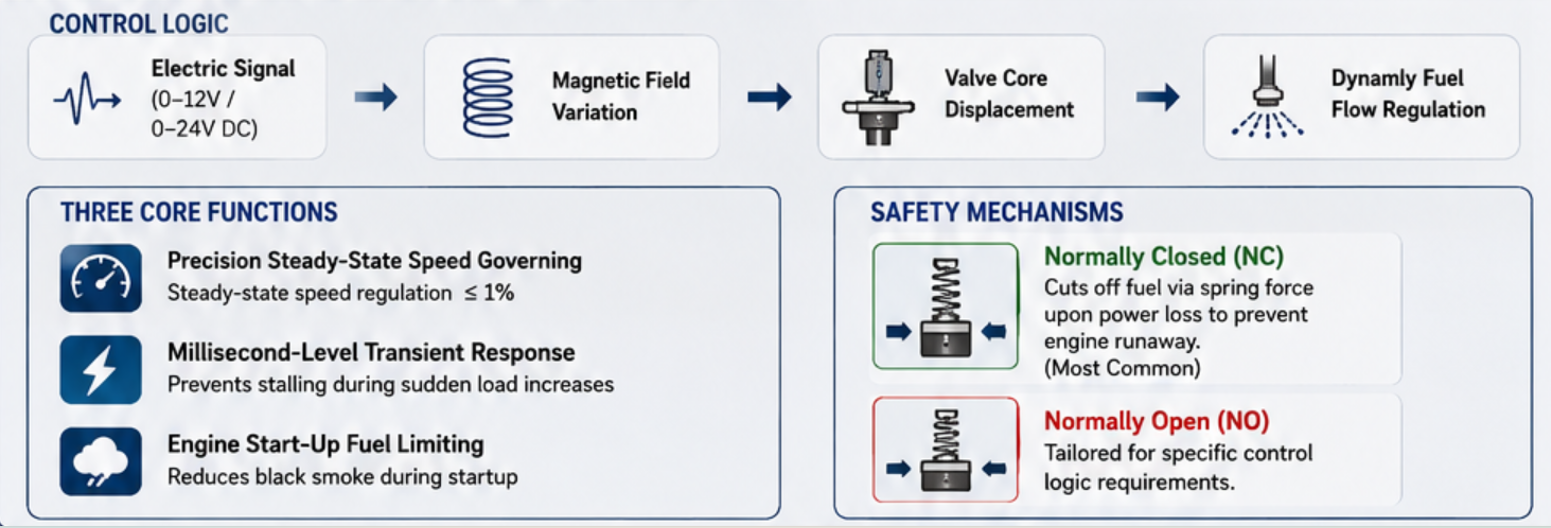
The basic working principle can be explained in five steps: Engine Controller → Electrical Signal → EFC Actuator → Fuel Adjustment → Engine Response
The engine control system monitors operating conditions and determines how much fuel is required. It then sends an electrical command to the Electronic Fuel Control Actuator. The actuator converts that electrical command into a mechanical adjustment within the fuel-control system. That adjustment changes fuel delivery. As engine load changes, the process happens continuously. For example, imagine a machine moving from light operation into demanding excavation work. The engine must respond to the additional load. The fuel-control system makes the necessary adjustment so that the engine can maintain the required speed and power. When the load falls again, fuel demand changes.
The actuator must respond accordingly. This is why response speed and control stability are important characteristics of an EFC Actuator. A well-matched actuator needs to respond consistently to the control signal while operating in an environment affected by heat, vibration and long working hours. For a construction machine operating every day, this is not simply an electronic function. It is part of maintaining predictable engine performance.
What Happens When an EFC Actuator Starts to Fail?
Fuel-control problems can appear in different ways. Depending on the engine and the nature of the fault, technicians may investigate the EFC Actuator when they encounter symptoms such as:
· Unstable engine speed
· Irregular idle
· Poor response when engine load changes
· Difficulty maintaining the required engine speed
· Intermittent engine operation
· Starting or running problems
· Unexpected changes in engine performance
However, an important point should be made here. These symptoms do not automatically mean that the EFC Actuator is faulty. Similar problems can be caused by wiring, connectors, fuel supply issues, sensors, control systems or other mechanical and electrical components. Professional diagnosis remains important.
Before replacing an Electronic Fuel Pump Actuator, technicians should check the relevant engine system, electrical connections and original part specifications. For distributors, this also highlights why correct product identification matters. Sending the wrong actuator to a customer does not solve the problem—it creates another one.
ISHIWA Introduces A New EFC Actuator Range
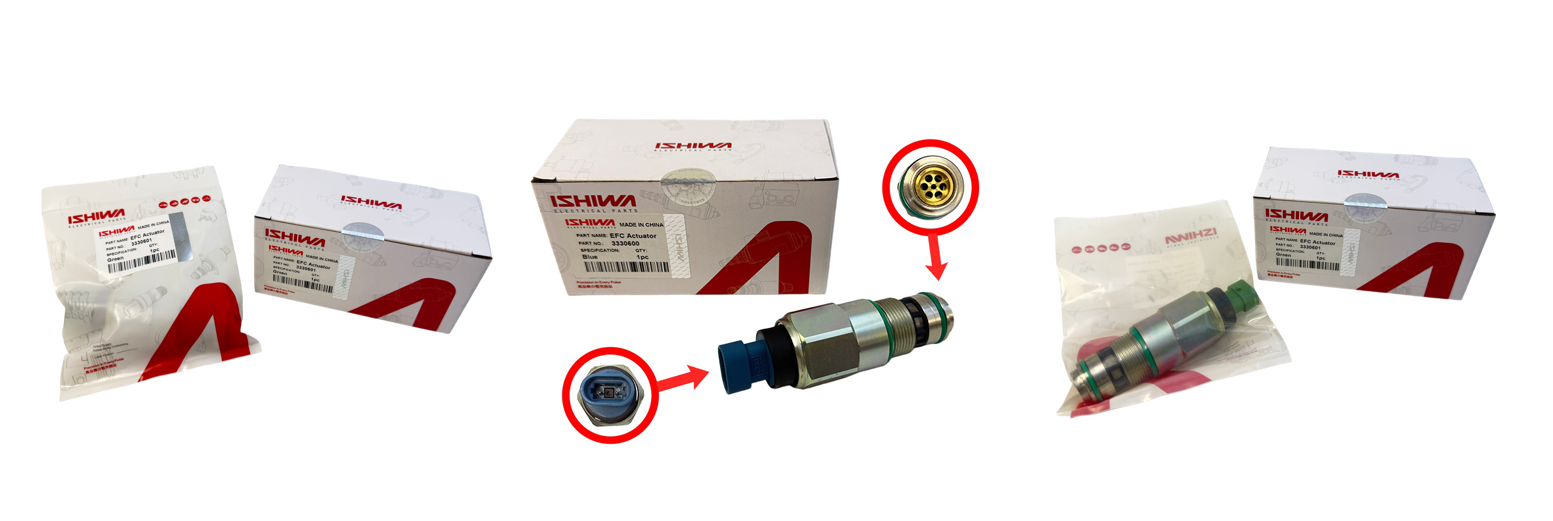
The new ISHIWA EFC Actuator range has been developed for the construction machinery and heavy-duty diesel aftermarket, where buyers increasingly need a combination of product availability, accurate matching and stable quality. ISHIWA is the new electrical parts brand developed by SCOTE Machinery, extending the company's construction machinery parts business into a wider range of electrical and electronically controlled components.
For the new EFC Actuator series, several areas have been given particular attention.
Stable Fuel Control
An actuator needs to provide repeatable movement in response to the control signal. Stable operation helps the fuel system make the required adjustments as engine conditions change.
Fast Response
Heavy equipment rarely operates under a constant load. Digging, lifting and travelling can quickly change engine demand. The actuator therefore needs to respond promptly when the control system requests an adjustment.
High-Temperature Resistance
Engine compartments can become extremely hot, particularly during long working shifts and in warmer climates. ISHIWA EFC Actuators are designed with these operating conditions in mind.
Vibration Resistance
Construction machinery is constantly exposed to vibration and shock. For an electrical component mounted on or around an engine and fuel system, resistance to these conditions is particularly important for dependable long-term operation.
Precision Manufacturing and Fit
Small dimensional differences can create installation or operating problems. ISHIWA focuses on accurate manufacturing and matching to help installers achieve the correct fit for the intended application.
Product Testing
The actuators undergo inspection and testing before leaving the factory. This provides an additional quality-control step before products enter distributor inventories or reach repair workshops.
ISHIWA Packaging and Anti-Counterfeit Identification
The products are supplied in dedicated ISHIWA branded packaging with anti-counterfeit identification. For distributors, branded packaging is more than a visual detail. Clear identification can make inventory management easier and gives downstream customers a more consistent product experience.
Why EFC Actuators Matter to Importers and Distributors
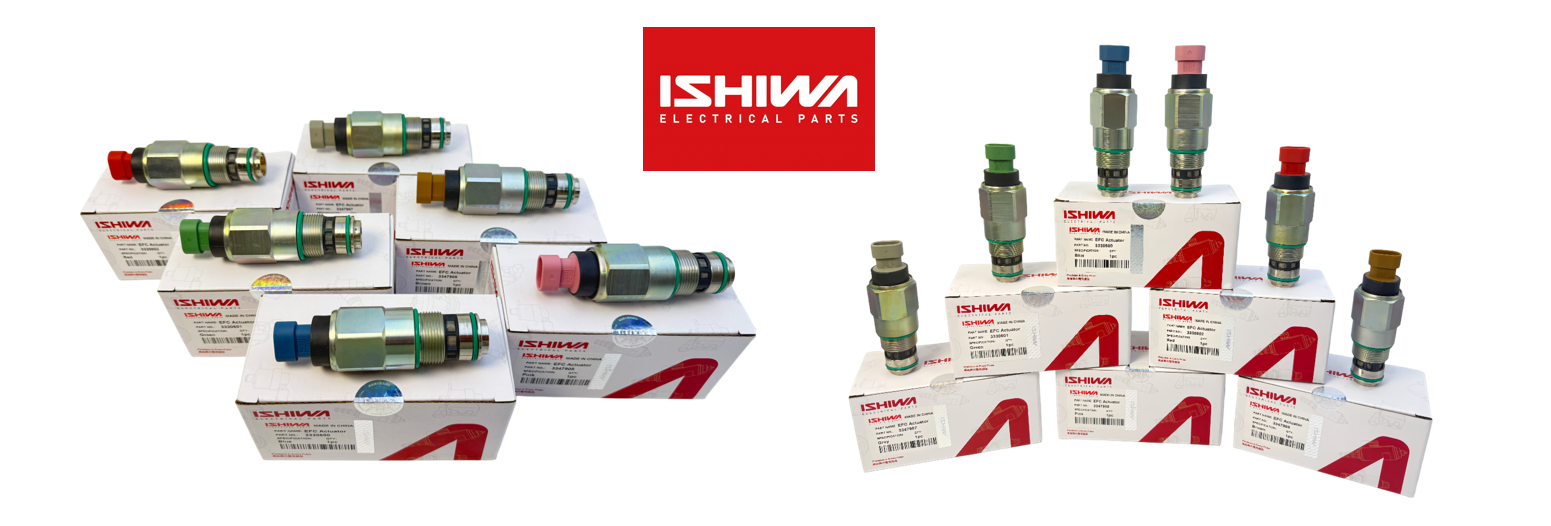
For an international parts distributor, an EFC Actuator has an interesting commercial profile. It is relatively compact compared with major engine components such as cylinder blocks, crankshafts or cylinder heads. That makes the product easier to store and more efficient to ship. At the same time, it performs an important function and can become an urgent requirement when a machine develops a fuel-control problem.
That creates aftermarket demand. But the opportunity also comes with responsibility. For importers and wholesalers, the real cost of a replacement component is not simply the price paid to the supplier.
There can also be costs associated with:
· Incorrect applications
· Customer returns
· Warranty claims
· Repeat international shipping
· Lost repair time
· Customer dissatisfaction
· Machines remaining out of service
This is why experienced B2B buyers often look beyond the lowest quotation. Accurate identification, consistent quality, stable stock and responsive technical support can be more valuable than a small difference in unit price.
ISHIWA's approach to the EFC Actuator range reflects these practical requirements of the international aftermarket.
Ready Stock Can Make a Difference
Downtime remains one of the biggest concerns in the heavy equipment industry. A machine that is not working is not generating revenue. For a repair company, waiting several weeks for a small but essential component can hold up an entire job. For a distributor, being able to supply that component quickly can strengthen customer loyalty. This is why stock availability is an important part of the ISHIWA strategy.
SCOTE Machinery maintains inventory for the EFC Actuator range to support international distributors, wholesalers and repair businesses requiring faster order fulfilment. For larger B2B customers, stable stock also makes it easier to plan repeat orders and maintain local inventory.
From SCOTE Machinery to ISHIWA Electrical Parts
The launch of ISHIWA represents a new step for SCOTE Machinery. SCOTE has spent more than 20 years working in international trade, with experience serving the construction machinery parts market and providing one-stop aftermarket sourcing solutions. Its business has reached customers across more than 115 countries and regions.
That experience has shown the company how the global replacement-parts market is changing. Mechanical engine components remain important, but modern construction machinery increasingly depends on electrical and electronically controlled systems. Customers who once purchased pistons, liners, bearings and overhaul components are also asking for sensors, switches, solenoids, actuators and other electrical parts.
ISHIWA has been developed to address this changing demand. The objective is straightforward: provide global parts businesses with a dedicated construction machinery electrical parts brand supported by SCOTE Machinery's international sourcing and service experience. The new EFC Actuator series is part of that wider product strategy.
A Practical Aftermarket Option for Heavy-Duty Engine Repair
Original components remain an important choice in many repair situations, but the global aftermarket also has a clear role to play. Equipment can remain in service for many years. As machines age, owners often become more sensitive to maintenance costs while still requiring dependable replacement parts. This creates demand for aftermarket alternatives that balance performance, availability and cost.
For repair workshops, the objective is usually practical: return the machine to service as efficiently as possible. For fleet owners, the concern is controlling total maintenance costs. For distributors, it is maintaining the right products in stock and providing customers with dependable options at different price levels.
ISHIWA EFC Actuators are positioned as a practical aftermarket solution for these requirements. The aim is not to make exaggerated comparisons with original products. Instead, the focus is on correct application, stable operation, manufacturing consistency and dependable supply. In the B2B replacement-parts market, those qualities matter.
How to Choose the Correct EFC Actuator
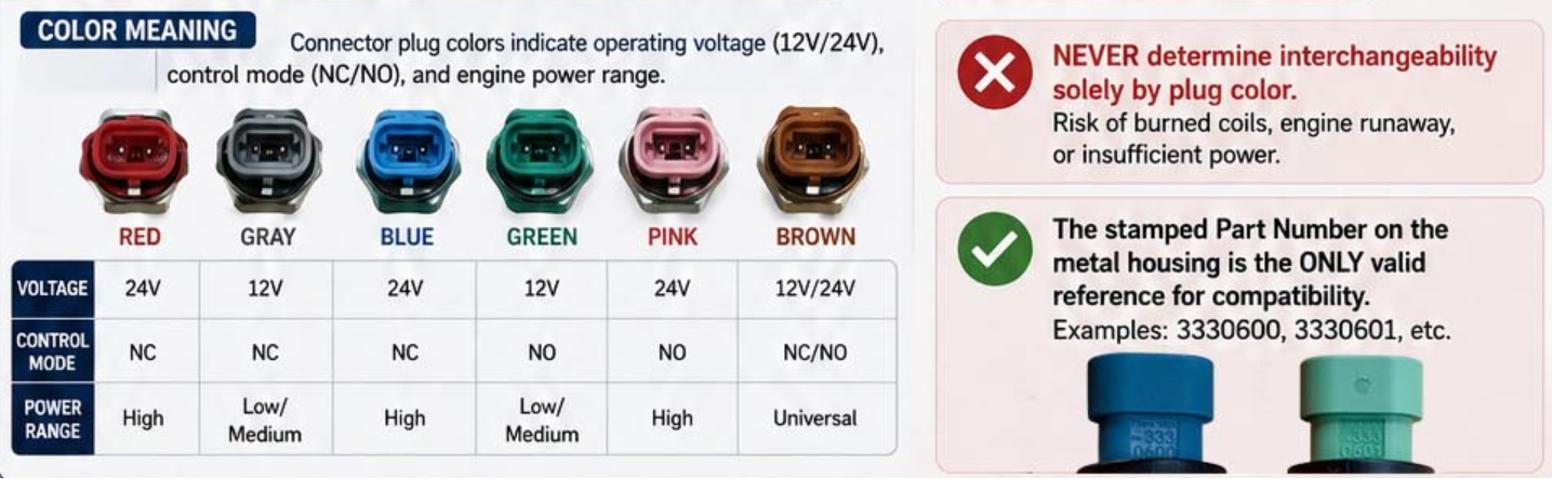
One of the most common problems in the replacement-parts business is assuming that two components are interchangeable because they look almost identical. With an EFC Actuator, that can be an expensive mistake.
The safest purchasing approach is to verify three key pieces of information:
1. Part Number
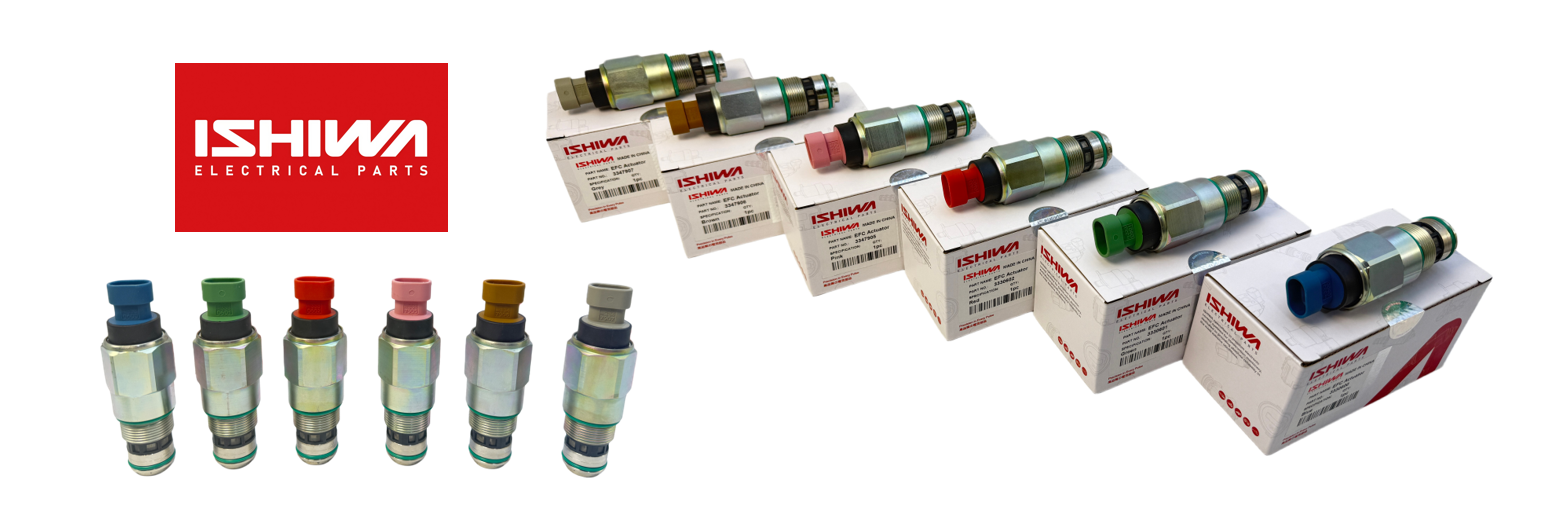
Start with the OEM or original part number whenever possible. Numbers such as 3330600, 3330601, 3330602, 3347905, 3347906 and 3347907 should be checked carefully rather than treated as interchangeable simply because the products have a similar shape.
2. Engine Model
Provide the exact engine model. For the current ISHIWA range, this can include applications involving QSK19, QSK23, QSK45 and QSK60 engines. Engine information helps the supplier narrow down the correct product much more effectively than a general description of the machine.
3. Connector Specification
Connector details should also be checked. Some actuators in the range use visually different two-pin connectors, including different connector colours. These differences can be useful for identification, but connector colour alone should never be used as the final selection method. Part numbers and technical specifications remain more reliable. When there is any doubt, buyers should send a clear photograph of the original actuator and connector together with the part number and engine information.
A few minutes spent checking the application can prevent days of delay later.
For importers, distributors and wholesalers interested in building an EFC Actuator product range, contact SCOTE Machinery for product availability, wholesale enquiries and application support.